
Elena & Stefano Faita
The keepers of Montreal’s Little Italy
Written by Joey Franco | Photography by Liana Carbone | Light and Photo Assisting by Anthony Liscio & Ian Hamilton (HAVEN creative space)
For Elena and Stefano Faita, Montreal’s Little Italy is not simply a neighbourhood. It is a family archive, a workplace, a classroom and, above all, a community where tradition continues to thrive. Their story stretches across generations, from the first difficult years of postwar immigration to a new era in which Italian culture is expressed through restaurants, television, food products and the daily rituals of neighbourhood life.
Elena arrived in Montreal from San Vittore del Lazio in 1954, at seven years old. Her family first lived on Saint-Dominique Street, close to Jean-Talon Market, where her mother worked among the farmers and vendors. It was a world built on proximity and mutual support.
“Like many Italians who immigrated at that time, we were a tight-knit community, always ready to help each other,” Elena recalls.
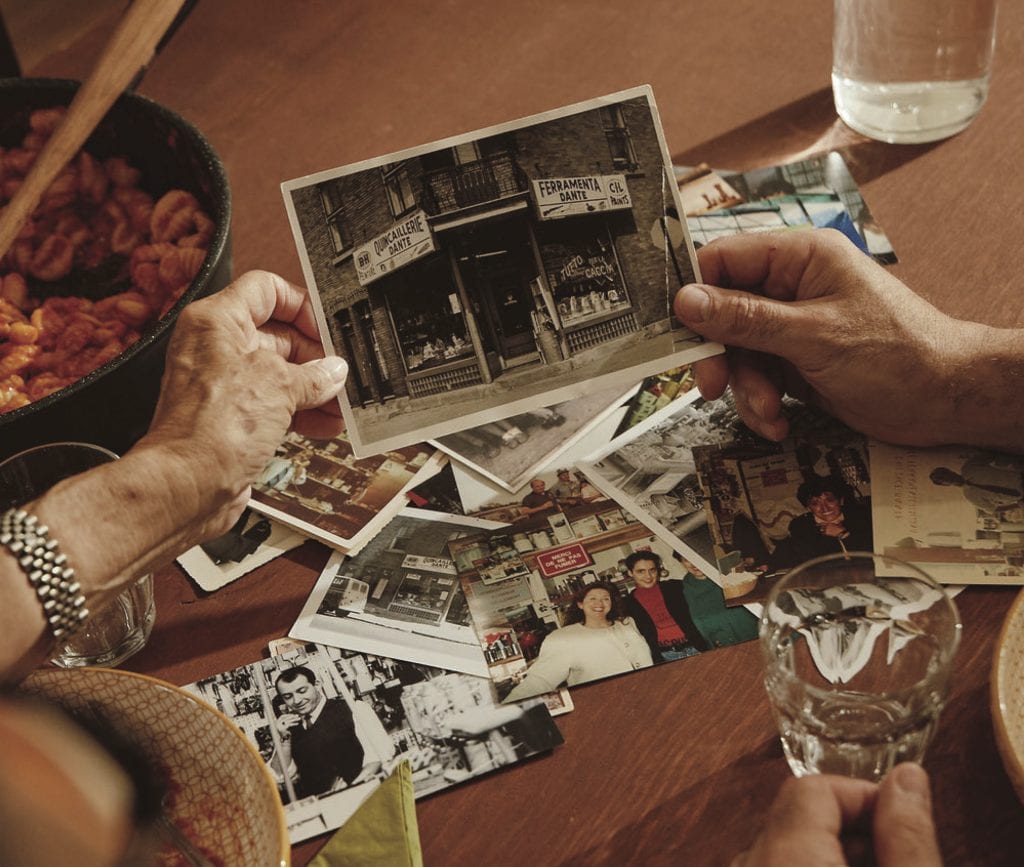
That same year, her uncle opened what would become Quincaillerie Dante, originally serving Italian immigrants who needed practical tools for rebuilding familiar routines in a new country: pasta machines, sausage makers, wine equipment, dishes and hardware. In 1956, Elena’s parents and older brothers took over the debt-burdened business. The family had little capital, and a bank initially refused her mother a loan.
Persistence changed the answer. That determination would become a defining feature of both the store and the family behind it.
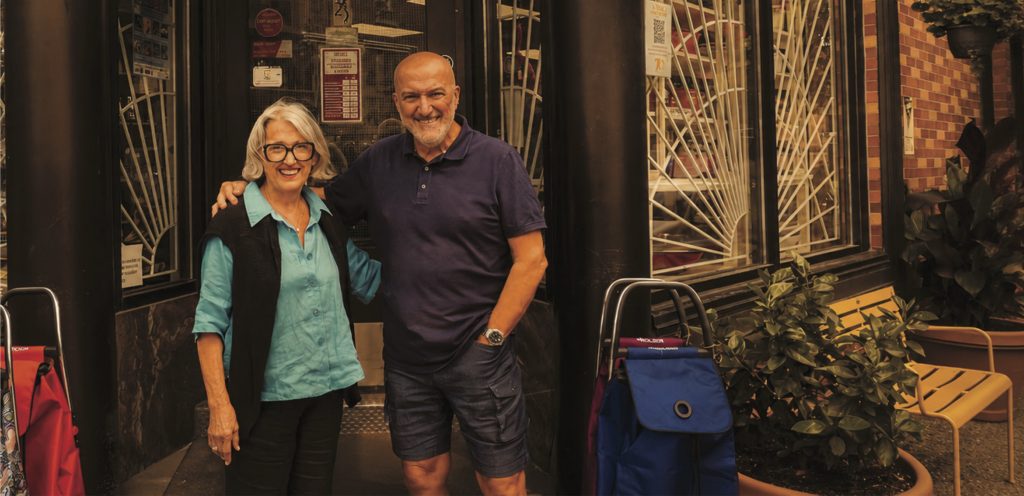
Today, Dante celebrates 70 years, with Elena’s brother Rudy Vendittelli central to the store and neighbourhood.
Elena entered the business at 14, leaving school during the day and continuing her education at night. Dante became more than a shop. It reflected the needs and aspirations of a growing Italian community, adding a hunting department in 1962 and serving customers whose lives often moved between construction sites, family tables and weekends outdoors.
As Italian families gradually left the neighbourhood for Saint-Léonard, Laval and the West Island, Elena understood that survival required evolution. The arrival of large hardware chains made that transformation even more urgent. Dante shifted away from paint, tools and general hardware and toward quality cookware and kitchen tools. The customer base expanded beyond the Italian community, particularly among French-speaking Quebecers eager to discover Italian food traditions.
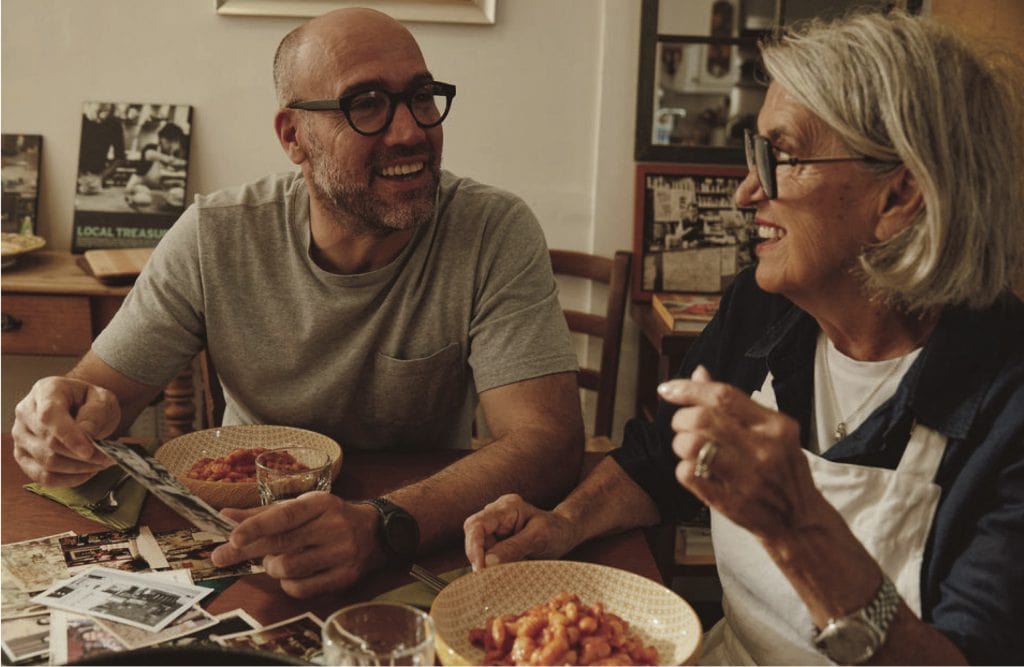
The turning point came through a home show, where Elena spent long days demonstrating fresh pasta. The positive public response led to the creation of the Mezza Luna cooking school with her daughter Cristina. Elena’s kitchen knowledge, once shared primarily around family tables, became a bridge between cultures.
Quebec audiences discovered not only recipes, but an entire philosophy around cooking and eating: seasonal ingredients, handmade pasta, tomato preserving, hospitality and the importance of eating together.

Montreal’s Little Italy: The Next Chapter
By Joey Franco
Historic institutions, new ownership and a changing generation are redefining what it means for Montreal’s most iconic Italian neighbourhood to remain Italian.
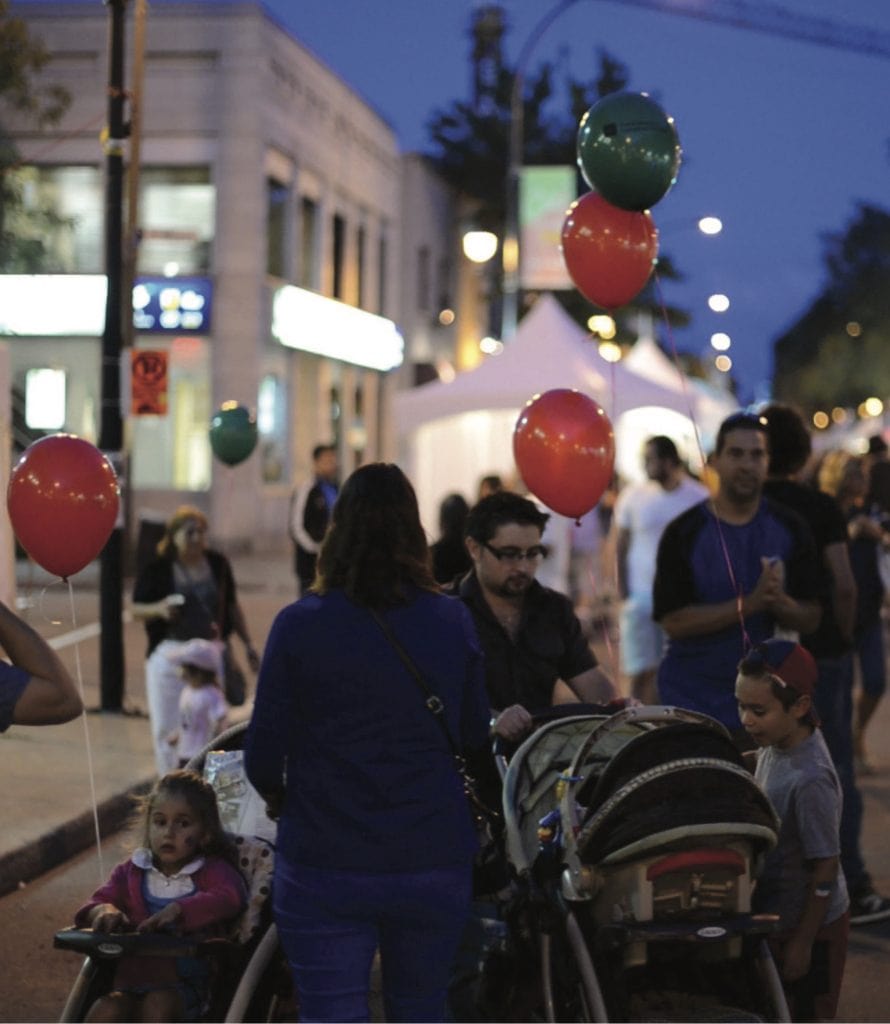
On a Saturday morning in Montreal’s Little Italy, the neighbourhood reveals itself in layers. Familiar rituals unfold: an espresso ordered at the counter, a quick exchange between longtime acquaintances, families moving between Jean-Talon Market and the shops along Saint-Laurent Boulevard. Italian can still be heard, sometimes in dialect, mixing naturally with French, English and the many other languages of the city.
Historic institutions stand beside newer restaurants, renovated cafés and businesses shaped by a generation that experiences its Italian identity differently from the one before it. The result is not a neighbourhood frozen in time, but one in transition.
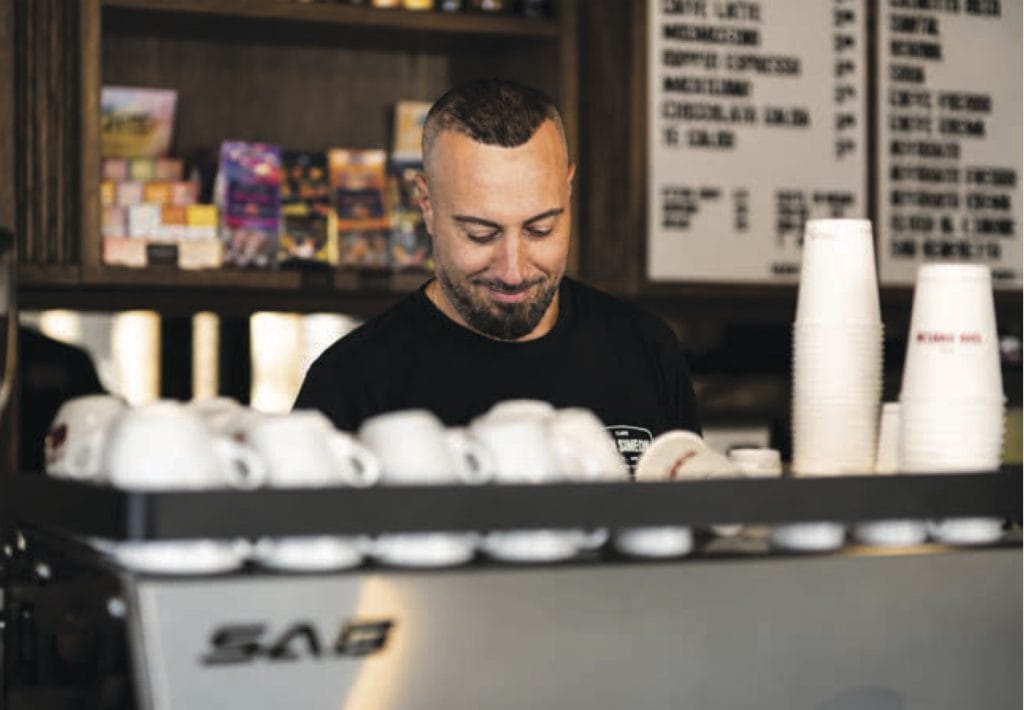
In 2026, that transition is especially visible. Casa d’Italia is marking its 90th anniversary, while Caffè Italia and Quincaillerie Dante each celebrate 70 years. Fruiterie Milano and Caffè an Simeon have also entered new chapters under younger Italian-Canadian ownership.
Together, these milestones raise a question that reaches beyond anniversaries and storefronts: Can Little Italy remain Italian while continuing to change?
To understand why that question matters, it is necessary to remember what the neighbourhood once represented. For Italian immigrants arriving before and aft er the Second World War, Little Italy was not a destination built around restaurants and festivals. It was a point of arrival—a place to find housing, work, familiar foods, parish life and fellow Italians who could help them navigate a new country.



Italianità Beyond Borders
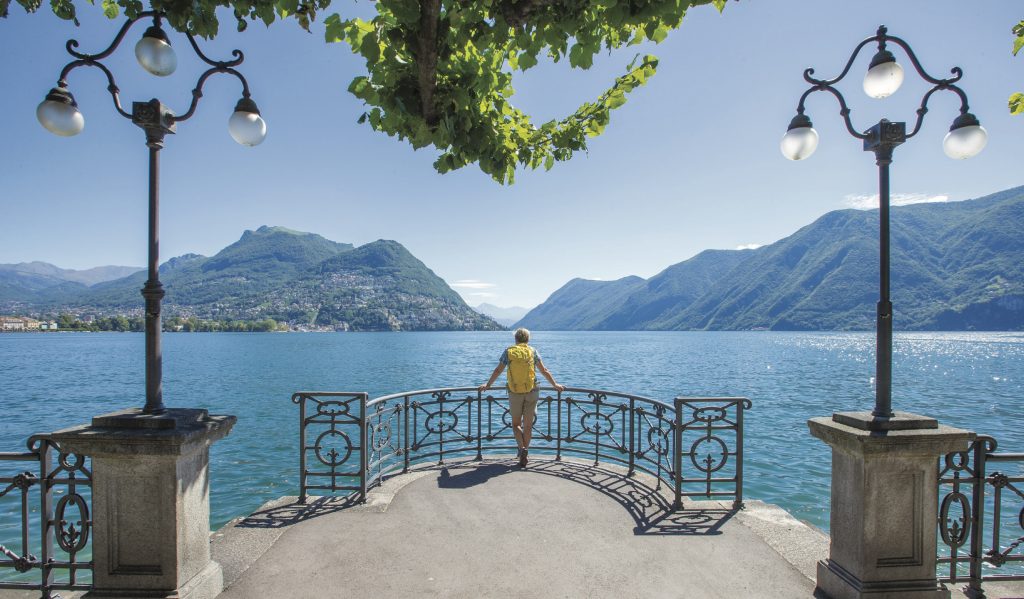
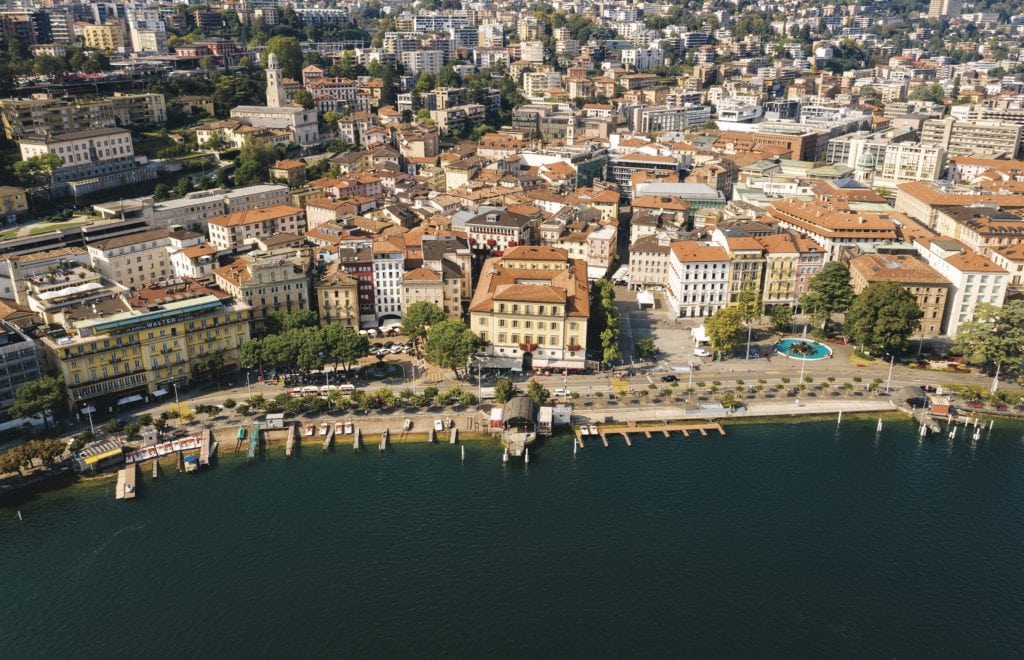
Ticino: Switzerland’s Italian Soul
By Silvana Longo, Travel Editor
As a proud Italian-Canadian, I have both passports. Straddling that biculturality, however, isn’t as clear-cut as you might think.
I was born in Canada, but somewhere deep in my DNA were instincts and sensibilities that always felt stronger than the place where I happened to be born and raised.
I’ve often wondered where my ‘Italianness’ begins and where my ‘Canadianness’ takes over? How do these two, at times almost diametrically opposed forces, coexist?
In my experience, there are no neat boxes that define cultural identity. In Italy, I’m Canadian, (usually after explaining that I’m not American a few hundred times, but that’s another story). In Canada, I’m the Italian, the envy of many a colleague when I unveil what I made for lunch on most days.
Over time, I have come to believe there is also a third reality, and that’s where the real magic happens.
Think of a strong seed transplanted into a new terroir. It doesn’t stop being what it is. It adapts to its surroundings, drawing something new from the soil while remaining true to its roots. Over time, it grows into something distinct.
Biculturality works much the same way.
That idea sparked a new curiosity in me: what happens to our italianità beyond Italy’s modern borders? After all, Italy itself is a relatively young country, unified only in the 19th century. Culture, language and tradition have always paid little attention to political lines drawn on a map.
So, for the first time in these pages, I’m taking you beyond Italy.
Between Two Slices
The best porchetta sandwiches in Montreal and Toronto
By Cassandra Marsillo & Rita DeMontis
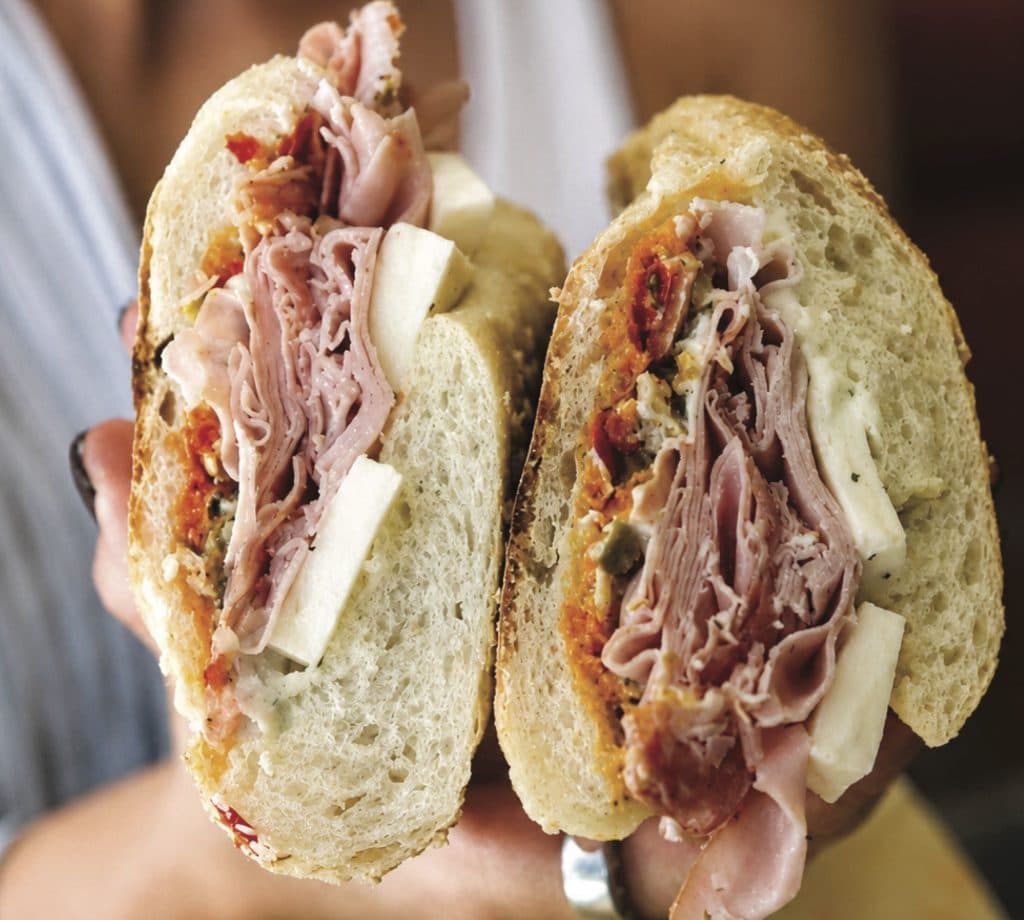
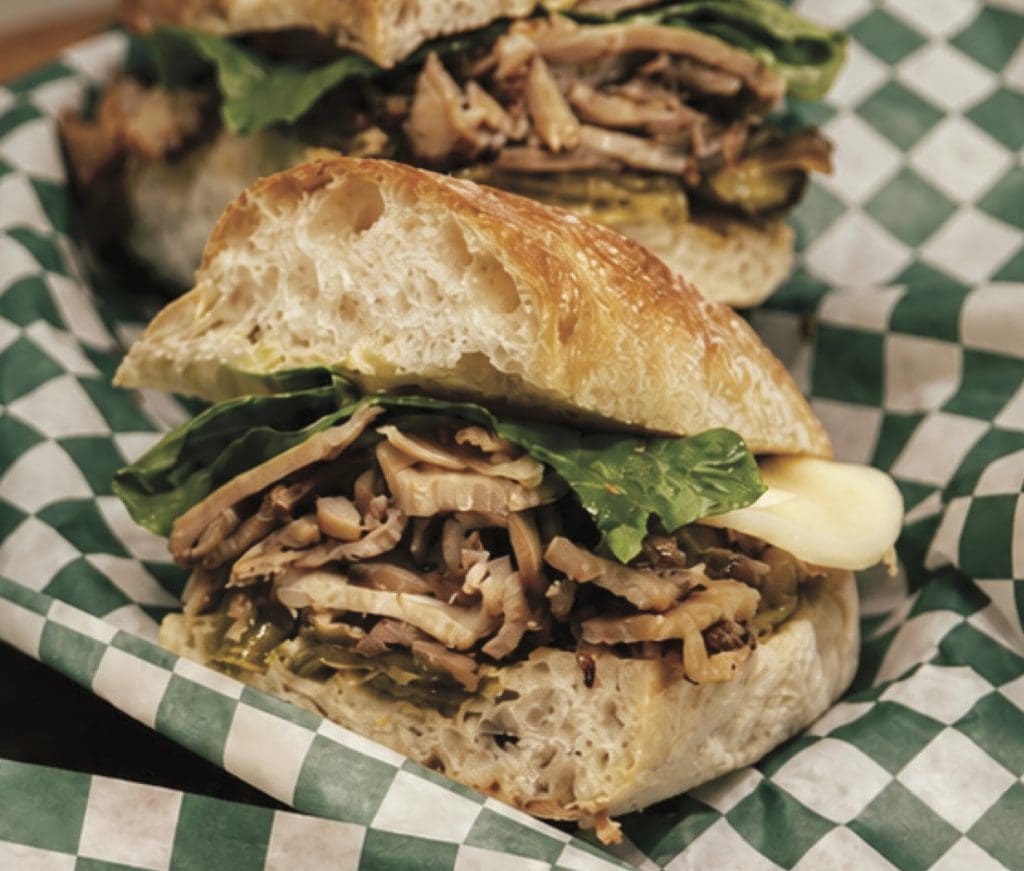
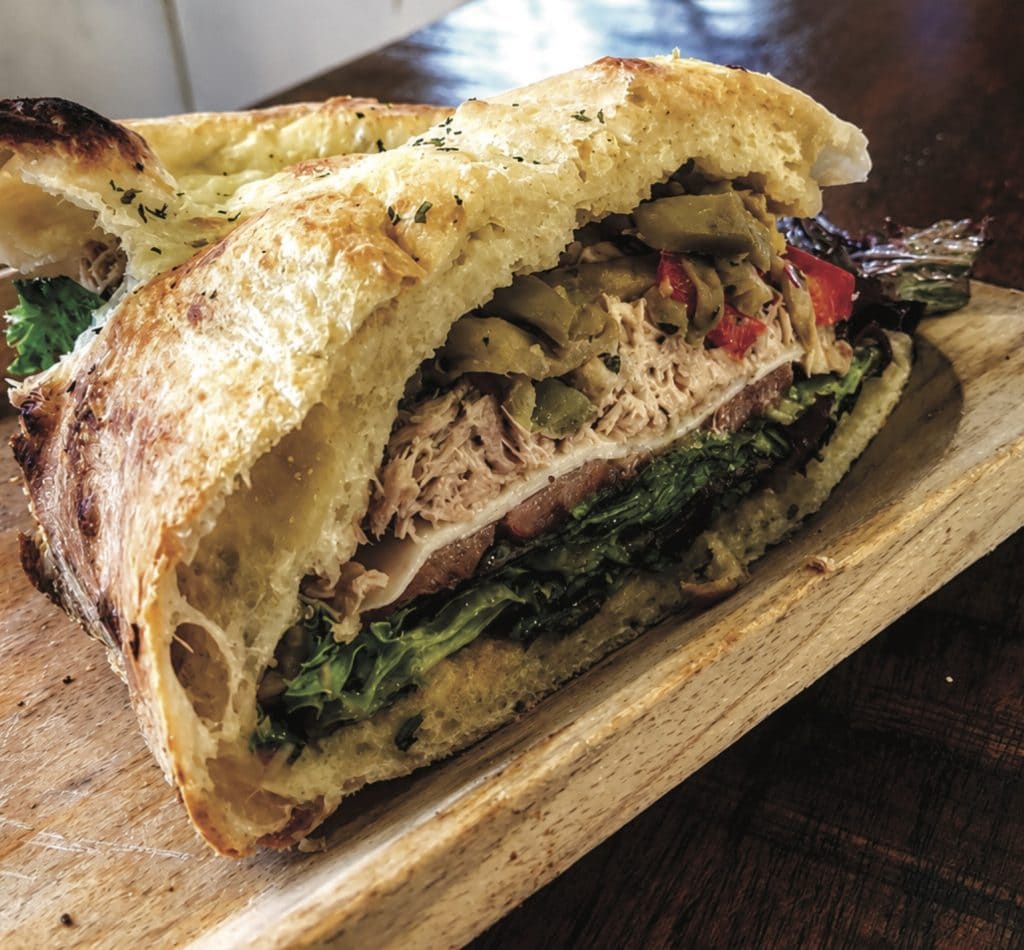
Nothing satisfies quite like a great porchetta sandwich. Slow-roasted until meltingly tender, seasoned with garlic, herbs and spices, then wrapped in crisp crackling, porchetta is one of Italy’s most irresistible culinary traditions. While every region claims its own blend of seasonings and cooking style, the result is always the same: rich, aromatic pork that’s equally at home at a family celebration, a neighbourhood feast or tucked into fresh bread for an unforgettable lunch.
Across Montreal and Toronto, Italian butchers, bakeries and sandwich shops continue that tradition with recipes often passed down through generations. Here the places serving porchetta that are worth travelling for.

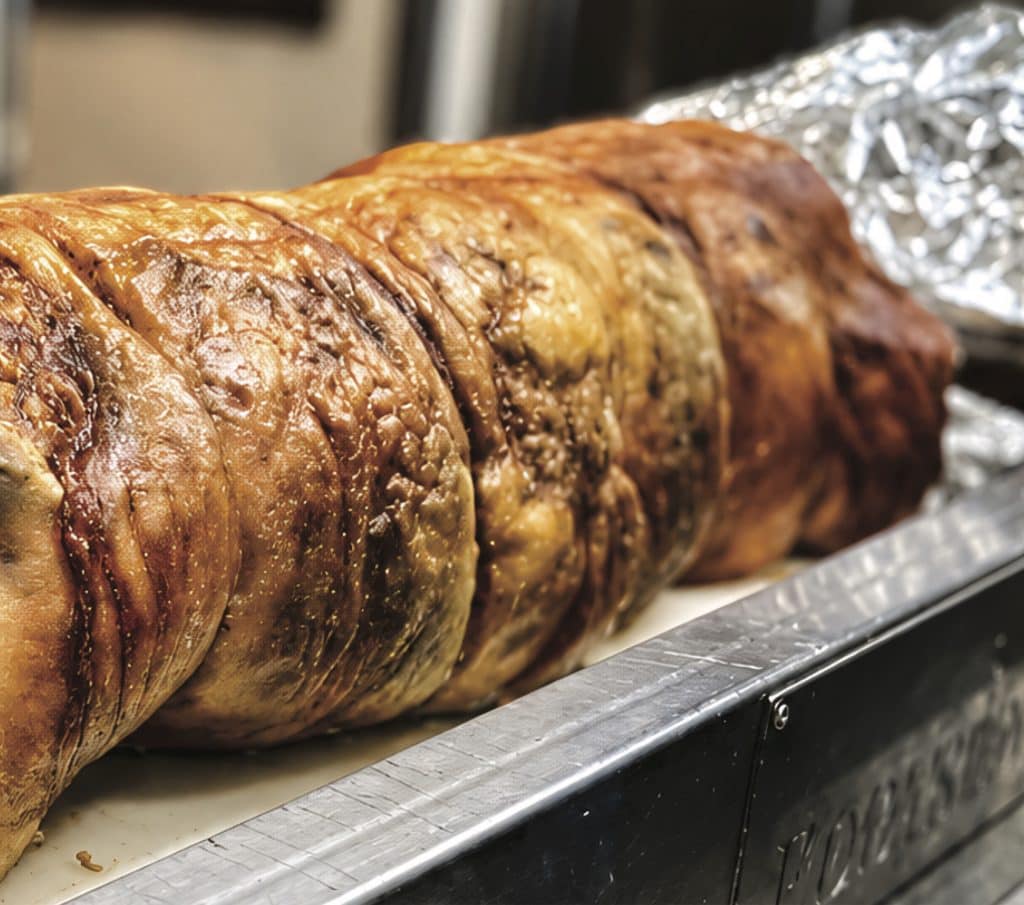

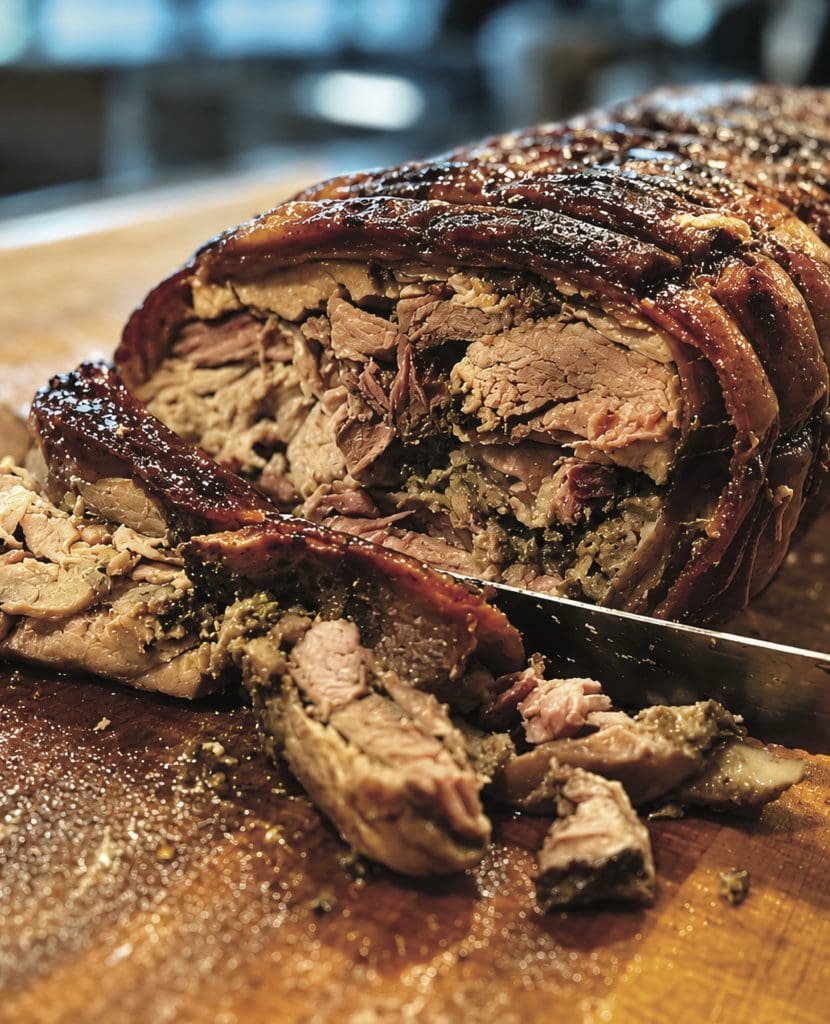
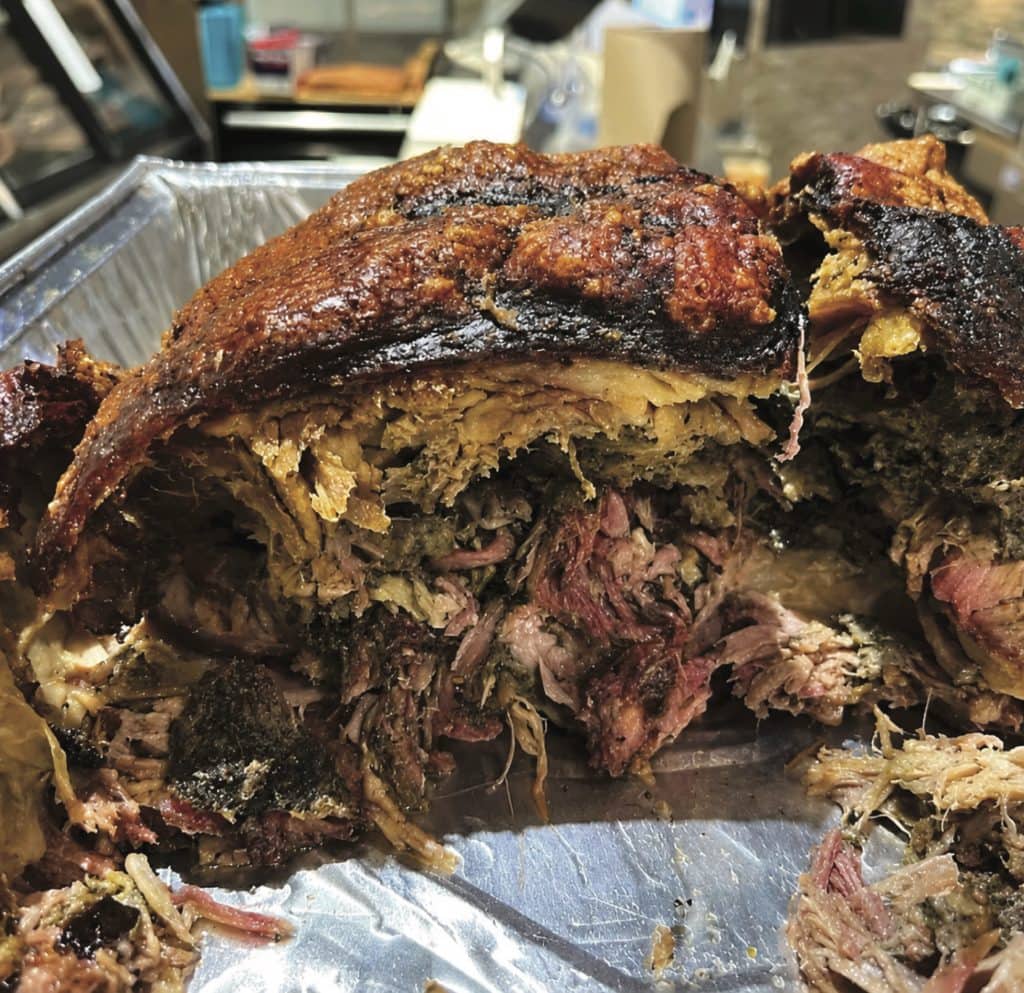

Panino Rustico alla Porchetta con Broccoletti e Pecorino Romano
Recipe & photography by Gabriel Riel-Salvatore, Managing Editor
A true taste of central Italy, this rustic porchetta sandwich takes inspiration from the traditional fraschette of Lazio, where simple ingredients and bold flavours are all that is needed.
Layers of warm porchetta, garlicky broccolini and sharp Pecorino Romano come together between slices of crusty country bread for a sandwich that is hearty, satisfying and unmistakably Italian.
